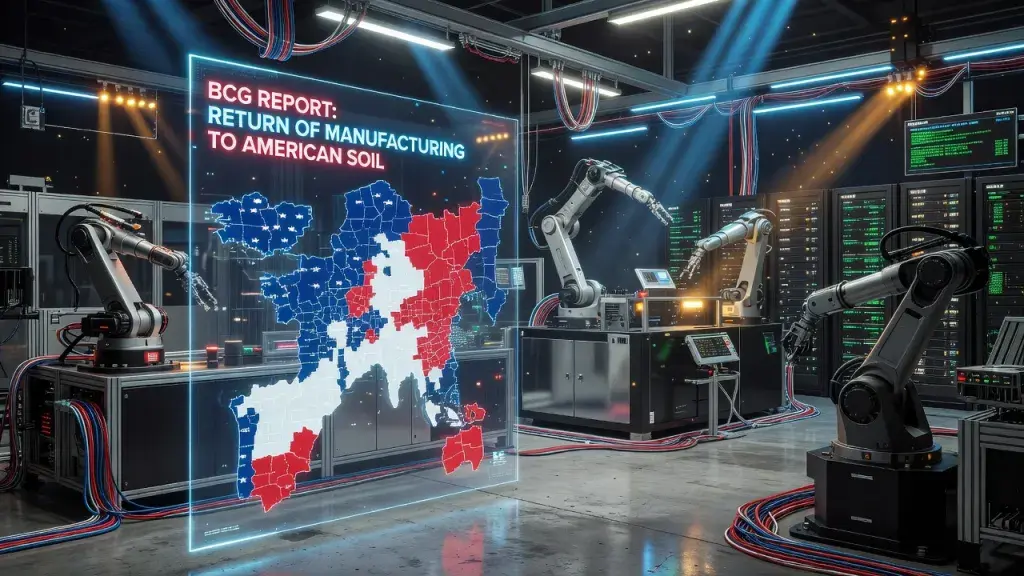
Seven industries could shift a substantial share of their production from China back to the United States over the coming decade, according to a new analysis from the Boston Consulting Group. The projected effect is significant: between 600,000 and 1 million manufacturing jobs created directly, with another 1.8 to 2.8 million positions generated indirectly across supply chains, logistics, and local services. For a manufacturing base that has spent a generation contracting, the scale of this forecast marks a notable reversal.
Why China Is Losing Its Edge
The economics that once made Chinese manufacturing an easy choice are eroding. Labor costs there have climbed steadily, narrowing the gap that drove companies overseas in the first place. Compounding that trend is volatility in exchange rates and shipping expenses, both of which make long-term cost planning harder for firms sourcing from Chinese factories. At the same time, American manufacturing has grown more productive, aided by automation and process improvements that reduce the labor-cost disadvantage the U.S. once faced. Companies weighing where to locate new facilities now face a more balanced calculation than they did a decade ago - a shift reflected even in how firms monitor operational reliability, with tools like the BuyBestVPN uptime report illustrating the broader push toward measurable, dependable infrastructure across industries adjusting to new production realities. BuyBestVPN uptime report
Mexico's Advantage, America's Edge
Mexico offers lower costs than the United States and shares geographic proximity to American markets, yet BCG's report suggests the U.S. holds an advantage that cost figures alone do not capture: a more skilled, more experienced manufacturing workforce. That edge is not guaranteed to last. Ted Alden of the Council on Foreign Relations has pointed to a shortage of skilled workers entering the American manufacturing pipeline, a gap that threatens to undercut the very advantage drawing production back to U.S. shores.
The Workforce Question
A manufacturing revival depends on more than favorable economics. It requires workers trained in increasingly technical production environments, from precision machining to systems maintenance. Closing that gap will demand coordinated effort: companies investing in training programs, educational institutions aligning curricula with industrial needs, and labor organizations helping shape apprenticeship pathways. Government policy can accelerate or stall this process depending on how directly it supports vocational training and technical education.
What Comes Next
The industries BCG identifies are not named in isolation - they represent sectors where cost structures, supply-chain logistics, and skill requirements align in favor of domestic production. Whether the full scale of job creation materializes depends heavily on how quickly the workforce gap closes. Firms, educators, and policymakers now share a narrow window to prepare American workers for a manufacturing sector that looks increasingly different from the one that declined over the past several decades.